
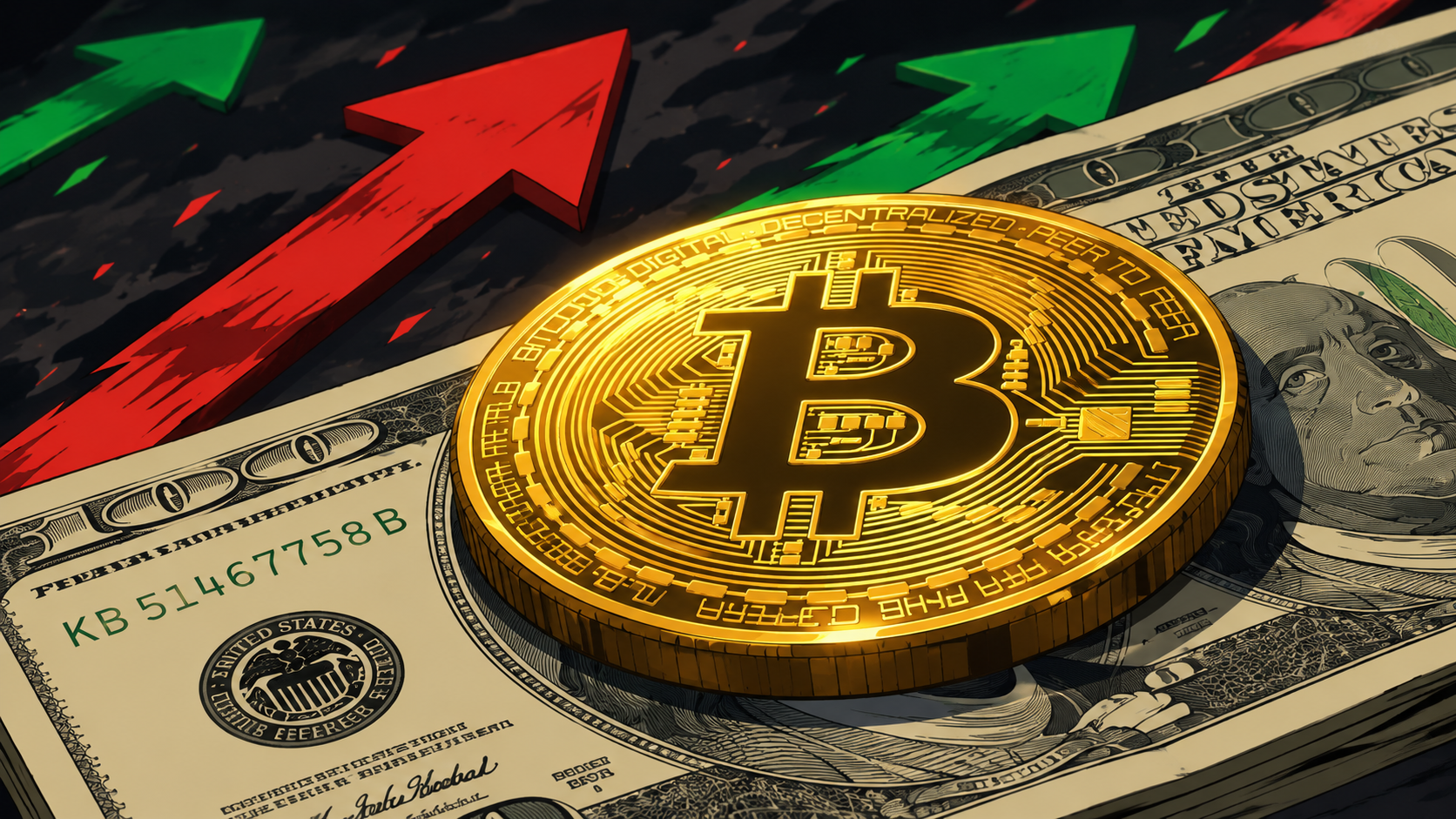

The question “is it worth investing in bitcoin in 2026?” isn’t just about money. It’s about fear, control, and the future.
You might even think you’re “investing” in Bitcoin… but what if, in reality, you’re buying protection against something much bigger? By the end of this article, you’ll see Bitcoin through different eyes — not as a bet, but as a way out.
In a world where governments print money without limits, where banks can restrict your access to your own balance, and where crises appear out of nowhere, what does “investing” really mean? Does it make sense to chase profit… or to protect what’s already yours?


If you’ve made it this far wanting to understand whether Bitcoin is still worth it, get ready: the answer might not be what you expected, but it’s probably what you needed to hear.
WHAT BITCOIN REALLY IS (AND WHY THAT CHANGES EVERYTHING)
Most people get into Bitcoin with the wrong mindset. They look at the chart, think about appreciation, try to predict the next “explosion.” But Bitcoin wasn’t born to be just another speculative asset — it emerged as a direct response to a broken system.
Created after the 2008 crisis, Bitcoin was designed to be a decentralized currency, free from control by governments or banks. That means no one can print more units, freeze your account, or interfere with your transactions. It’s a network based on mathematical rules, not political decisions.
And here’s the point that changes everything: when you buy Bitcoin, you’re not just “investing.” You’re partially stepping outside a system where you have no control.
You’re choosing a form of money that doesn’t depend on trust in third parties. In a scenario where fiat currencies lose value over time, Bitcoin positions itself as a scarce and predictable alternative.
BITCOIN ISN’T AN INVESTMENT… IT’S PROTECTION
This idea might seem counterintuitive at first, but it makes complete sense when you look at the global scenario more closely. Bitcoin shouldn’t be seen only as an asset to multiply money, but as protection against the loss of purchasing power.
Why does traditional money keep losing value?
The fiat system runs on monetary expansion. Governments print money constantly to finance debt, stimulate the economy, or cover crises. The problem is that the more money exists, the lower the value of each unit.
This causes inflation. And inflation isn’t just rising prices — it’s the silent erosion of the value of your work over time.
Where does Bitcoin fit into this?
Bitcoin has a limited supply of 21 million units. This means that, unlike traditional money, it cannot be inflated by political decisions. This programmed scarcity turns Bitcoin into something closer to a “digital vault” than a traditional investment.
In other words: you don’t buy Bitcoin to get rich quickly. You buy it so you don’t slowly become poor.
Read also: How To Earn Passive Income With Cryptocurrencies In 2026
IS IT WORTH INVESTING IN BITCOIN IN 2026?
This is the central question, and the honest answer is: it depends on how you see Bitcoin.
If you’re looking for quick gains, you might be disappointed. The market remains volatile, and cycles of highs and lows are part of the asset’s nature. But if you’re looking for long-term protection, financial autonomy, and independence from centralized systems, then the answer changes completely.
In 2026, Bitcoin is no longer a novelty. It has gone through cycles, faced criticism, withstood regulations, and continues to function exactly as it was designed to. That alone says a lot.
Beyond that, we’re seeing growing adoption by companies, institutions, and even countries. This doesn’t guarantee immediate appreciation, but it strengthens the thesis that Bitcoin is here to stay.
THE MAIN BENEFITS OF BITCOIN IN 2026
1. Total autonomy over your money
With Bitcoin, you are the true owner of your funds. There’s no bank to freeze it, no government to confiscate it. As long as you control your private keys, the money is truly yours.
2. Censorship resistance
Bitcoin transactions cannot be stopped by third parties. This is extremely powerful in a world where financial restrictions can happen suddenly.
3. Absolute scarcity
Unlike any fiat currency, Bitcoin has a fixed limit. This creates a unique supply and demand dynamic that tends to favor those who accumulate over time.
4. Global portability
You can carry millions in Bitcoin with just a memorized password. This eliminates geographic barriers and facilitates financial mobility.
THE RISKS YOU NEED TO UNDERSTAND
Not everything is rosy, and ignoring that would be a mistake.
Bitcoin is still volatile. Its price can drop drastically in short periods, which scares people who don’t understand its purpose. Additionally, the responsibility is greater: if you lose your private keys, you lose access to your money.
Another important point is regulation. Although Bitcoin is decentralized, governments can create barriers to its use, which can impact adoption in certain countries.
But here’s the difference: these risks are the price of freedom. And each person needs to decide whether it’s worth paying it.
SMART STRATEGY: HOW TO APPROACH BITCOIN IN 2026
If you want to make the most of Bitcoin without falling into common traps, you need to adjust your mindset.
Instead of trying to “make quick money,” think about accumulating over time. Strategies like DCA (periodic purchases) help reduce the impact of volatility and build a solid long-term position.
Another important tip is to study self-custody. Storing your Bitcoin in your own wallets increases your security and reinforces the asset’s main value: independence.
THE TRUTH ABOUT INVESTING IN BITCOIN IN 2026
So, after all, is it worth investing in bitcoin in 2026?
If you’re looking for a traditional investment, maybe not. Bitcoin doesn’t follow the rules of the conventional market, doesn’t generate passive income (at least not yet), and doesn’t depend on corporate performance.
But if you’re looking for protection against inflation, financial autonomy, and an alternative to the current system, then yes, it makes more sense than ever.
Bitcoin doesn’t promise easy wealth. It offers something rarer: control.
And in a world where almost everything can be taken from you… control is power.
FAQ – FREQUENTLY ASKED QUESTIONS
1. Can Bitcoin still appreciate in 2026?
Yes, but appreciation depends on factors like adoption, demand, and the macroeconomic scenario. The main focus should be the long term.
2. Is it safe to invest in Bitcoin today?
Bitcoin itself is safe, but the risk lies in how you store it. Using your own wallets increases security but brings great responsibilities.
3. Do I need a lot of money to get started?
No. It’s possible to buy fractions of Bitcoin, allowing you to start with small amounts.
4. Can Bitcoin replace traditional money?
Not necessarily replace it, but it can coexist as a more resistant and independent alternative.
5. What’s the biggest mistake people make when getting into Bitcoin?
Getting in only thinking about quick profit and selling at the first sign of a drop, without understanding the asset’s real purpose.
This content is not investment advice; do your own research.
Now tell me: after all this, do you still see Bitcoin the same way? Comment here and keep exploring content that will change the way you see money.